Everything else we do feeds into this. Day trades, options and swing trades generate cash, and most of that cash ends up in a few long term positions we've researched far more than anything we trade short term. We plan to hold these for years, and we keep adding to them.
We are inspired by how Berkshire Hathaway invests: wait for a great business at a price that doesn't reflect what it's worth, then be patient. The difference is that we also trade actively, and the trading profits keep buying more shares.
How We Pick a Conviction Position
The market is missing something specific. Not "this stock is cheap," but a clear reason the price doesn't reflect the business. For META it's revenue lines the market isn't modeling. For INGN it's a company valued below what its cash and revenue suggest.
We understand the people running it. Leadership changes, activist investors, buybacks and capital allocation decisions often tell us more than the chart does.
We can hold through drawdowns. These positions will have long stretches where nothing happens or the price goes the wrong way. We only build them in companies where the research gives us the confidence to keep adding.
Current Positions
We have been buying Meta since around $190 across four accounts. Our thesis is that the market still values it as an ad company while it builds new businesses in commerce, messaging, hardware and AI, all with instant access to more than 3.5 billion daily users. We added at $605 in April 2026 when the stock fell 12% on a capex increase, and Muse's launch in September was the first strong evidence on the AI side.
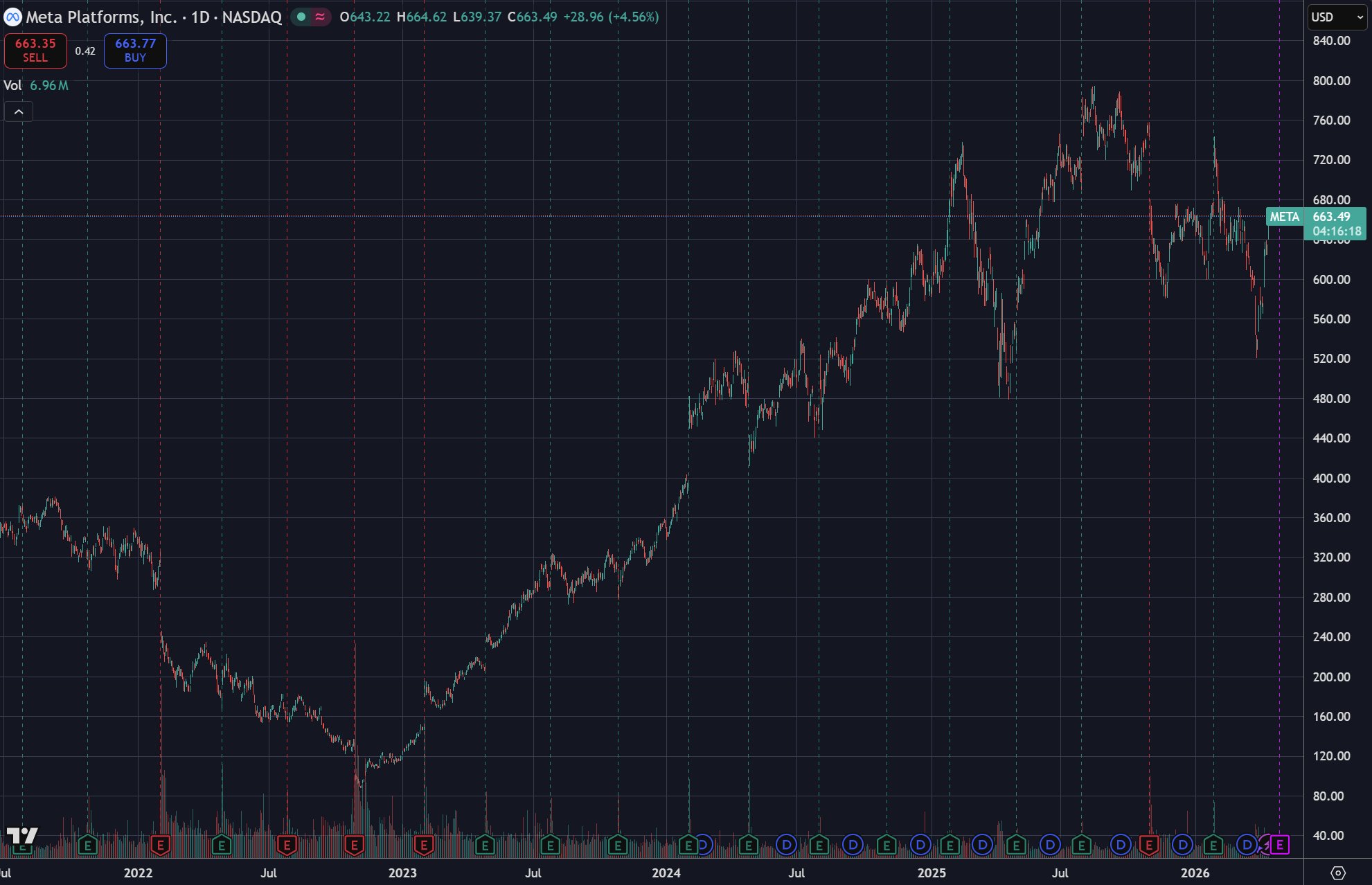
META daily chart from 2021 to 2026, including the 2022 drawdown we kept buying through.
Inogen is a respiratory device company with no debt, a large cash balance relative to its market cap, and almost no analyst coverage. Over the past year it brought in a new CFO from Baxter, gained an activist investor on the board, started buying back stock, and agreed to sell its shrinking rental business to Rotech. We hold a large position and add on weakness, including shares bought with profits from our MU and Intel shorts.
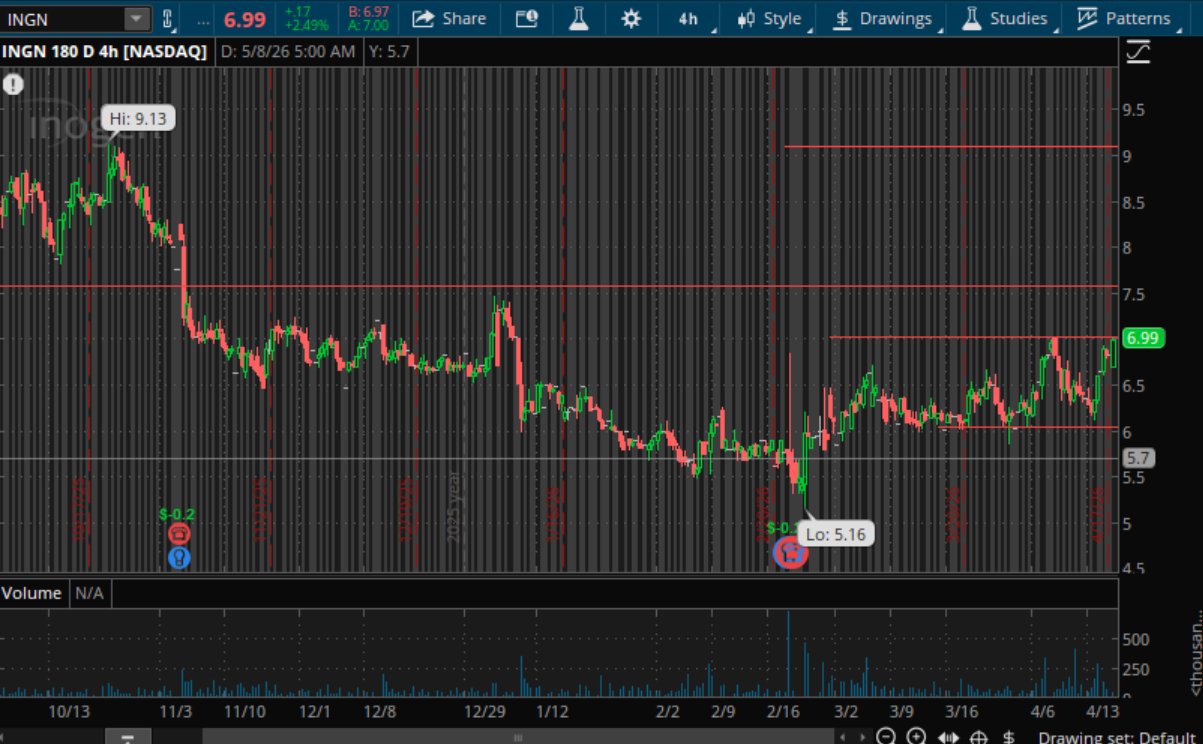
INGN 180 day chart. Building higher lows since February. The lines are hand drawn support and resistance, with no indicators.
Between 2020 and 2024 we accumulated 125,000 XRP tokens between $0.30 and $0.50 and held through a long drawdown. We sold 80% of the position between $2.50 and $3.50. Long term doesn't mean forever. When the price reflects the thesis, we take the gains.
The Flywheel
On May 15, 2026, while we were closing our Intel short for about $20 a share, we bought 700 shares of INGN at $6.30. When we closed the Micron short a few days later, we added a few hundred more. That's how it usually works: short term trades produce cash, the cash buys more of the companies we believe in, and the long term positions grow from both new money and price appreciation.
Adding on Fear, Not on Hype
We don't chase our long term names when they run. We add when the market sells them off for reasons that don't change the business, like META's capex scare in April or the slow, low volume days on INGN. Buying when others are nervous is uncomfortable, but it's where the best prices tend to be.
Common Questions
How long do you plan to hold?
Usually three to five years or longer, as long as the thesis holds. We sold most of our XRP after a 5 to 7x move, so long term doesn't mean we never sell.
Do members get alerts when you add to a long term position?
Yes. Adds, trims and the reasoning behind them are posted in the Discord in real time, the same as short term trades.
How many long term positions do you hold?
Very few. Concentration is intentional. We'd rather know a handful of companies deeply than own dozens we don't understand.
What if a long term position goes against you?
We go back to the research instead of the price. If the business is improving and the stock is falling, we usually add. If the thesis breaks, we sell.
Sweet Spot Trading is for educational and informational purposes only. Trade ideas are opinions, not financial advice, and past results do not guarantee future returns. Trading, and especially options and short selling, involves substantial risk of loss.